Why this matters: factorials help you count how many different orders are possible without listing every single one.
How many ways can 4 friends stand in a line?
You could try listing every order, but that gets messy fast. Factorials give a faster way to count all possible arrangements.
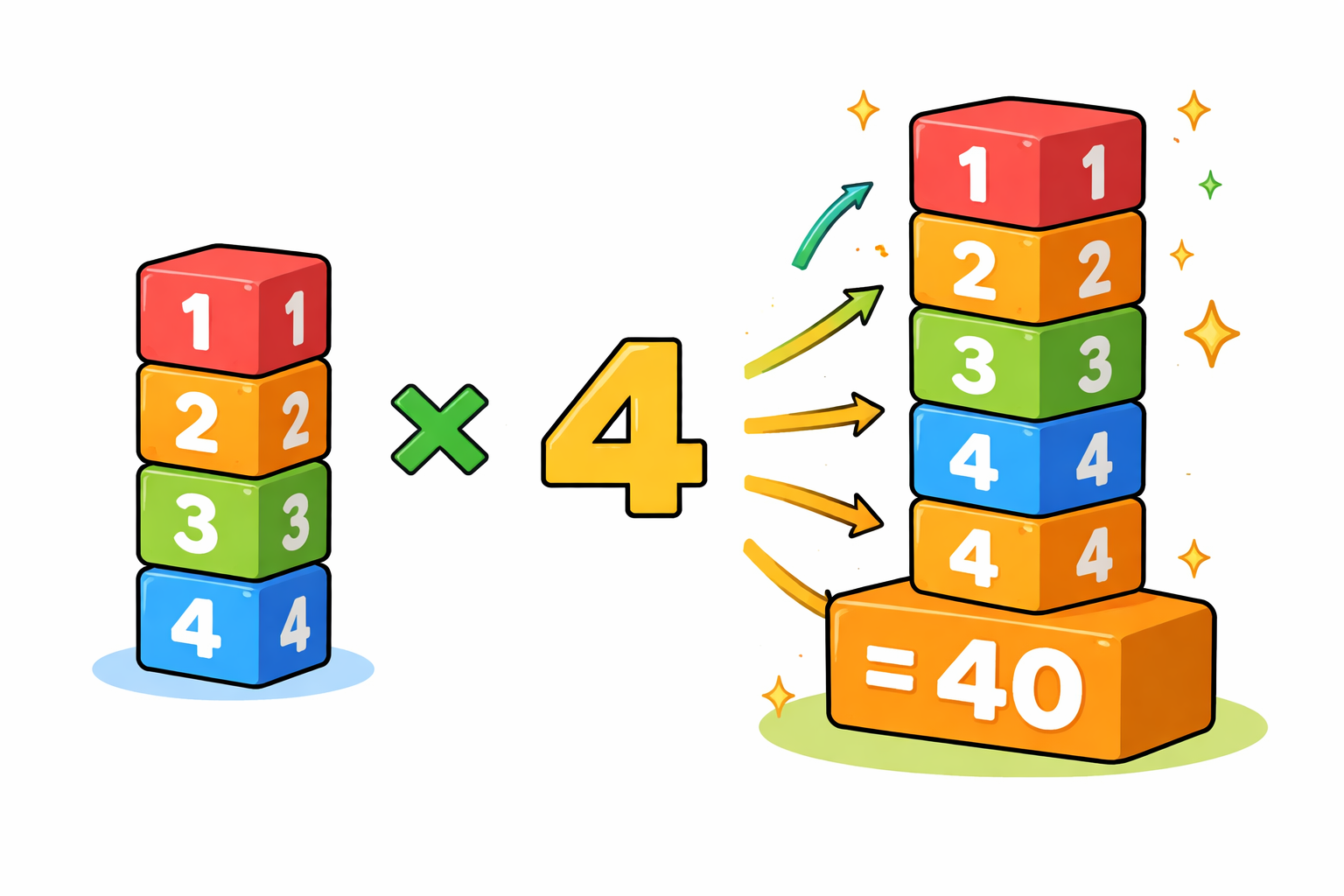
What does the exclamation mark mean?
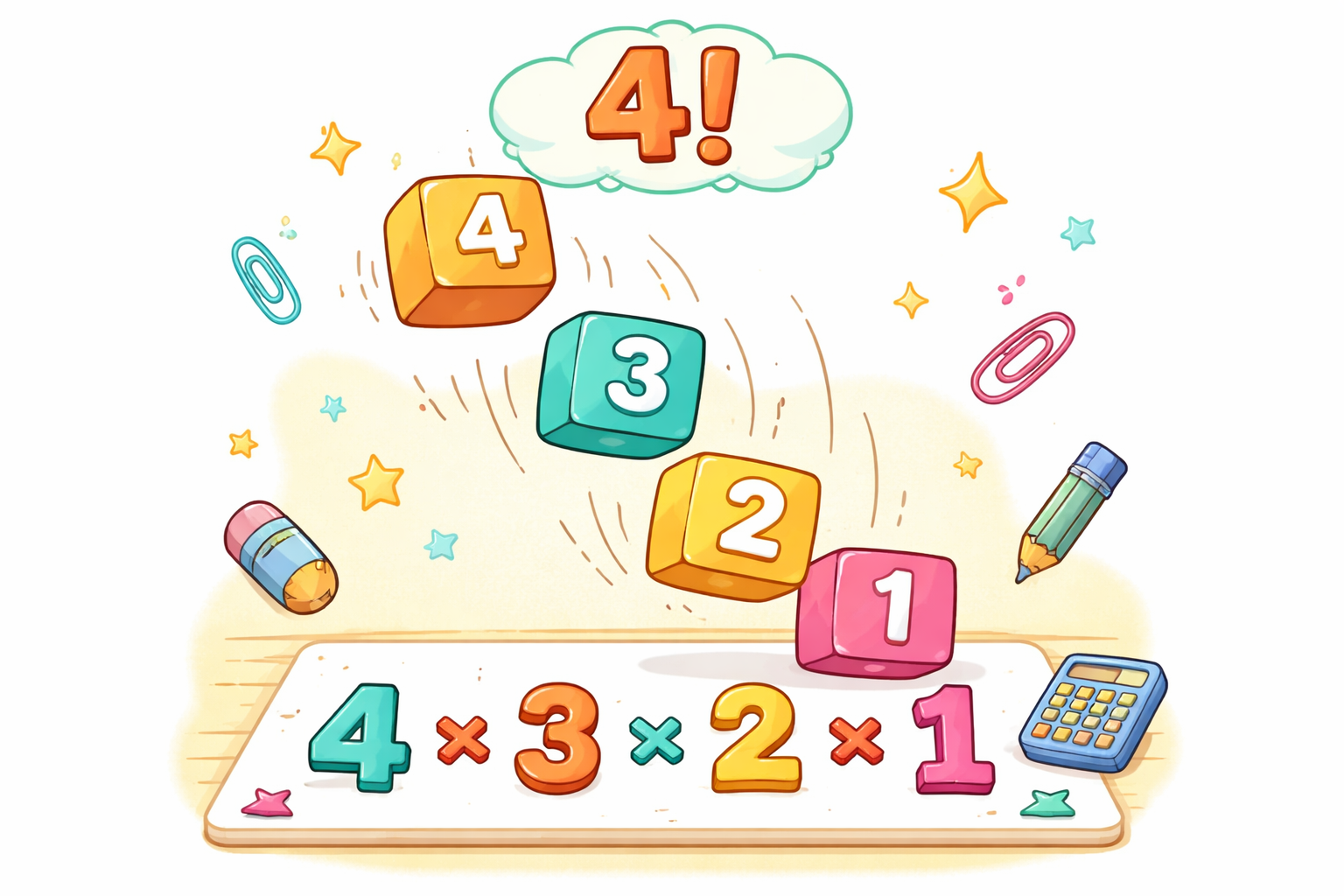
A factorial is written with an exclamation mark. It means multiply a whole number by every smaller whole number down to 1.
means
4 × 3 × 2 × 1
means
5 × 4 × 3 × 2 × 1
means
1
Try a reveal
Factorials grow quickly
Each time the starting number goes up by 1, the total can jump a lot. That is why listing every arrangement becomes impossible for large numbers.

4! equals 24, so 4 different objects can be arranged in 24 unique orders.
Which expression matches 4! ?
Why is 0! equal to 1?
It may look strange, but mathematicians define 0! as 1. One reason is that there is exactly one way to arrange zero objects: do nothing. This rule also keeps factorial patterns working smoothly.
Tap to compare
Factorials help count arrangements
If 3 books can be placed on a shelf in any order, the number of possible orders is 3! = 6. For 4 books, it becomes 24. Factorials save time because we do not need to list every order.
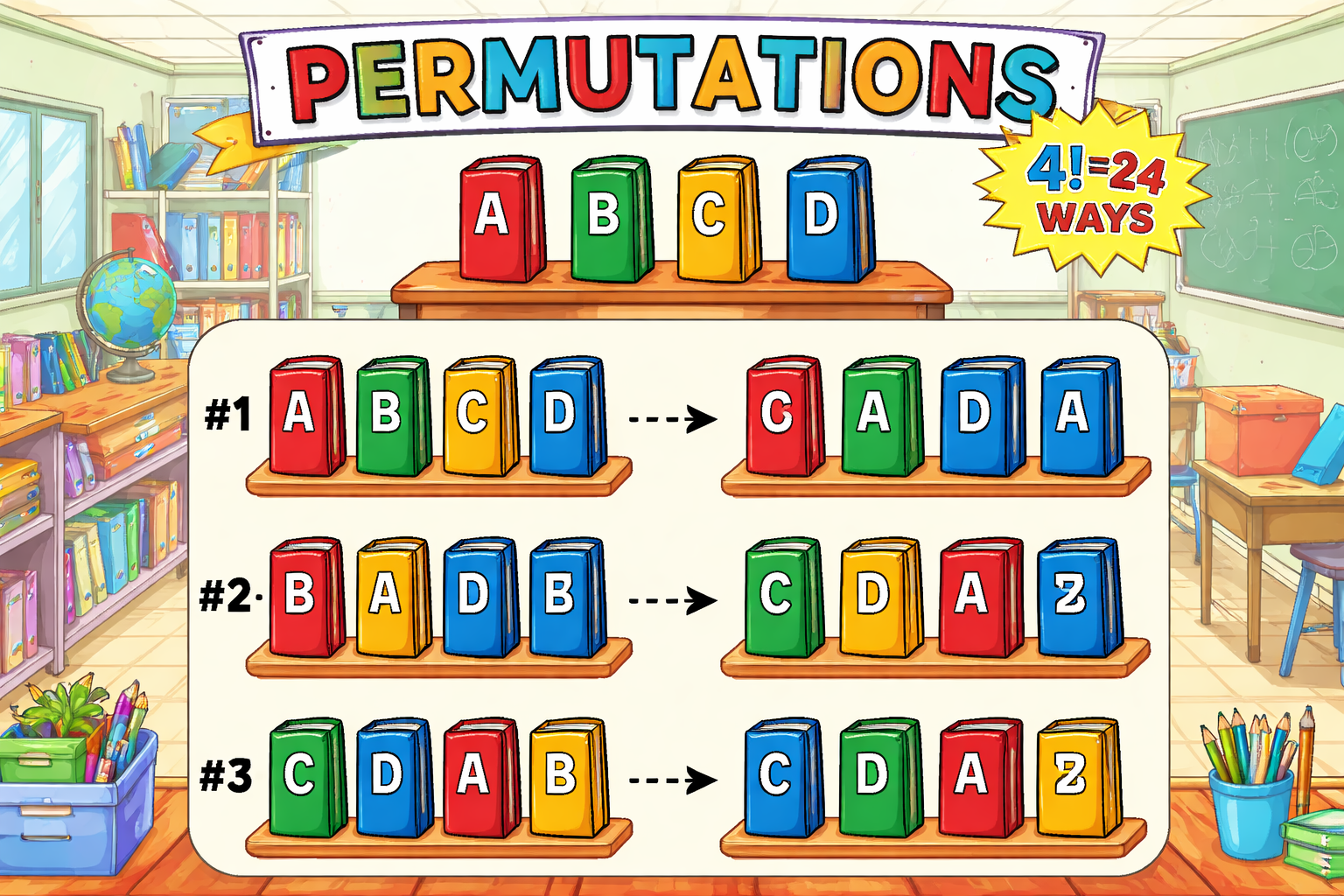
Highlight a possible order
Build a factorial step by step
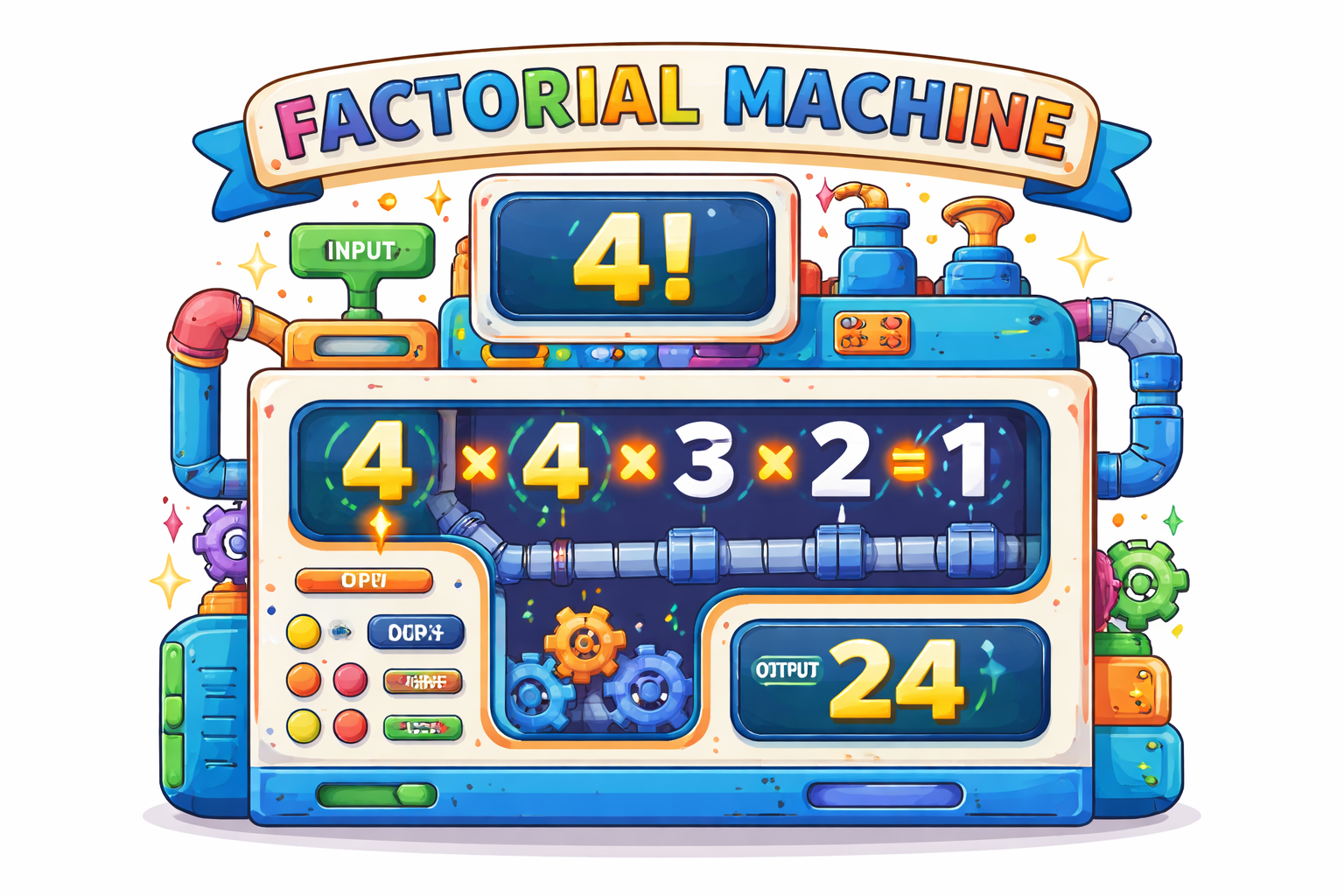
Enter a whole number from 0 to 7. The tool will expand the factorial and show the total.
Tip
Because factorials grow fast, we are using only small numbers here. That makes it easier to focus on the pattern.
Why do factorials matter in counting?
Factorial is not the same as exponent
These can look similar, but they mean different things. A factorial multiplies downward. An exponent repeats the same factor.
4 × 3 × 2 × 1
4 × 4
4 × 4 × 4
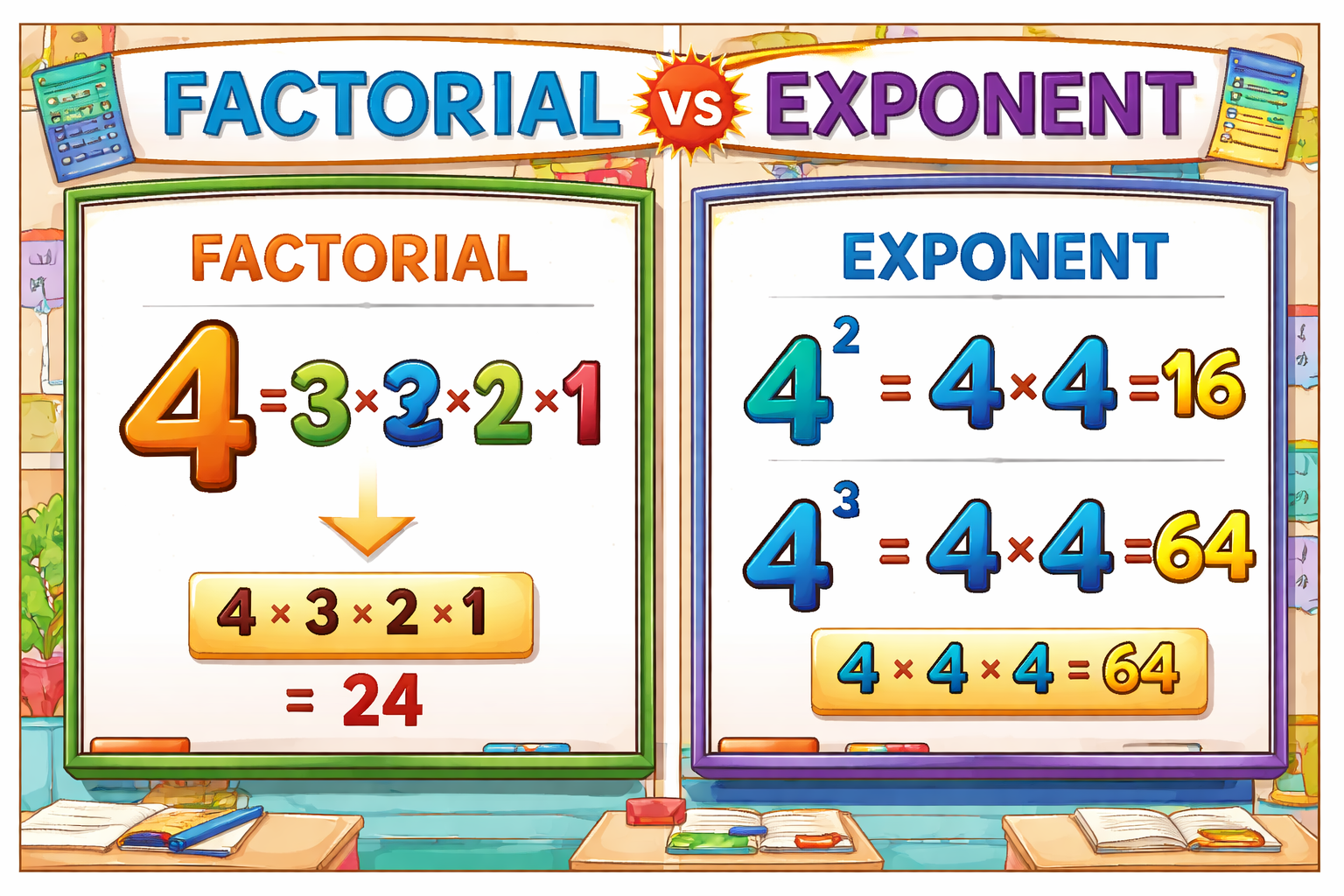
Choose a comparison
Use clues instead of guessing
If a question asks for the number of different orders for 5 objects, ask yourself: does order matter, and are objects repeated? If order matters and nothing repeats, factorial is a strong clue.
- Objects are all different
- Order matters
- No repeats are used
Decision practice
Which one is a factorial question?
Three steps for factorial questions
Find the starting number.
Multiply down to 1.
Check if the question is about order.
These steps help you decide when factorials belong and how to compute them correctly.
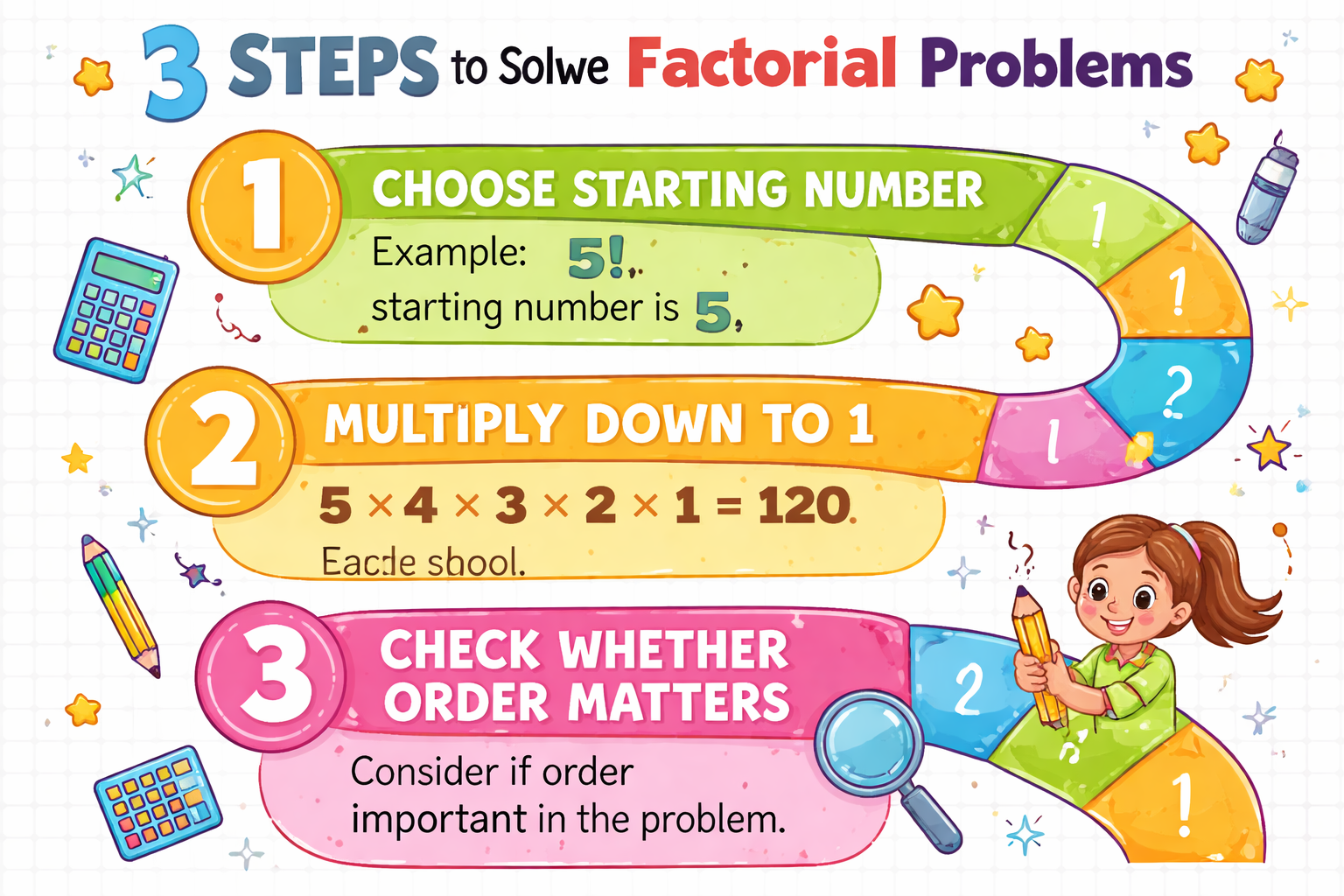
Tap the strategy cards
Summary
Ready for the assessment? Use the summary above if you want one final review before you begin.
Assessment Intro
You are about to answer 5 questions. Each question has exactly 4 options. Choose your best answer and then move on. You will see your score only at the end.
- No per-question correctness feedback during the assessment
- You must answer the current assessment question before using Next
- A score of 80% or higher unlocks the certificate path
Loading question...
Loading question...
Loading question...
Loading question...
Which factorial expression matches the number of different orders for 6 different books on a shelf?
Choose the best answer. Your response is saved as soon as you select an option.
Your assessment results
Complete the assessment to view your final score.